Categories
Finance

5 common small business myths

When you start your own business, it can be easy to fall into the trap of believing in myths. From bookkeeping to customer service, there are plenty out there – and some of them seem true enough to take seriously. The problem with this? They can steer your business in the wrong direction.

Put simply, it’s about time SMEs stopped spinning so many plates – especially when some plates aren’t worth the time. Here are five small business myths you need to stop believing.

Myth 1: Bookkeeping is just about the numbers

It’s a common myth that bookkeeping is a numbers game. While it’s true that numbers do have a big part to play, it’s actually much more than this. Essentially, a bookeeper is responsible for organising and storing accounting and financial documents such as statements, income tax records, ledgers and journals.

Source: Conveyancing.com.au NSW

In fact, there are many skills that a good bookkeeper needs to help keep a business afloat that goes beyond being savvy with numbers. Discipline, good communication and a high level of organisation are required. They also need to have a solid understanding of the bigger picture, which means, knowing how expenses or new staff hires will impact the business six or 12 months down the track.

Proper bookkeeping makes it easier to fulfill tax obligations, analyse and manage finances, make plans for the business, and abide by the law. Consult with a local bookkeeper for some professional advice.

Myth 2: Be active on all social media platforms

For small businesses, it’s important to be active on social media. However, it’s equally as important to be active on the right platforms in the right way.

The truth is, being present on every single platform can be overkill. While it might seem easy to use software tools to publish your content automatically across several channels, what works on Facebook doesn’t necessarily work on Twitter or LinkedIn.

Take extra time to optimise your content for each platform. Think about the tone, angle and word length of each post, making sure it’s appropriate for your different audiences. Do your research and find out where your customers are having promising conversations and narrow your presence to where this is happening.

Myth 3: You should be working all the time

Running a small business will certainly keep you busy. It often feels like there is so much to do and so little time to do it. So we overwork ourselves to keep on top of things. However, everyone is human – and everyone needs a break.

Need proof? It’s actually scientifically proven that prioritising your breaks at work will make you happier, more focused and more productive. Taking breaks gives our brains a much-needed rest, allowing us to get back to our tasks with renewed energy and focus. They also relax our brains, helping us retain information and make valuable connections, as well as reevaluate our goals.

Simply put, making time for breaks equals making time for your business.

Myth 4: Voluntary administration is the end of your business

While some people might see it as an extreme action, voluntary administration can be a smart move. The truth is, when your business is in a sticky situation where debts can’t be paid, restructuring your operations, creditors and assets is a way of potentially improving your financial position.

The aim of voluntary administration (VA) is always to get a business back to financial health if possible, or to make sure that creditors get a better return than if the business was liquidated.

If you’re up against the wall, going into VA can give your business breathing space, as an external administrator takes control of your business while its finances can be reviewed. It’s a simple process, and contrary to what some people believe, can help your business get back on track.

Contact local bookkeepers

Myth 5: The customer is always right

There’s no denying that customers are crucial to your business. However, it’s important to balance their needs with yours and your employees’ needs too. Here are three instances when the customer is actually wrong:

  • When they make you or your staff unhappy
    Nobody deserves abuse. Sometimes customers get angry and expect people to be held accountable. However, if you know you or your employee to be right, it’s best to hold your ground. 
  • When they’re bad for business
    If a customer is disrespectful for absolutely no reason – it’s better to let them go. It shouldn’t be a matter of finances, especially if it’s causing you or your staff unnecessary trouble.
  • When they’re not worth it
    Some customers simply aren’t valuable to your business, particularly if they’re giving your staff trouble time and time again. Instead, it’s better to focus on customers that deserve your services and are willing to work with you.

Be a small business myth buster

Sometimes it can be tricky to figure out myth from reality. While busting myths is something you’ll naturally do when running a SME, it’s always helpful to know what to believe and what to dismiss before going in.

Categories
Walls & flooring

How to install underfloor insulation

What is underfloor insulation?

Underfloor insulation is an extra layer added underneath floorboards to prevent hot or cold air from escaping the home. Insulation can come in various different materials, such as polystyrene board, batt insulation and reflective foil.

Benefits of underfloor insulation

Floor insulation has many benefits. The main reasons why homeowners choose to install insulation in floors include:

Soundproofing

Your flooring can allow sounds and reverberations to filter through. With an insulating barrier between floorboards and the outside, the acoustics of vibration and sound waves is limited, resulting in a quieter environment.

Energy-efficient

By insulating your floors and ceilings, energy savings of up to 45% is possible. Whether you have hardwood floors with joists or a concrete slab, your floors are responsible for a considerable amount of heat loss. 

Saves you money in the long run

Underfloor insulation will keep your home warmer in the winter and cool in the summer. The need to use heating and air conditioning will be significantly reduced, which will save you money when it comes to your energy bills. Even though underfloor insulation costs money to install, it should pay off in the long run when you spend less on heating and cooling. 

Easy to install 

There is not a lot of complicated installation requirements that comes with under house insulation. Fitting insulation between floor joints can be a simple procedure. Different types of insulation include:

  • Fibreglass/wool batts
  • Rock wool batts
  • Polyurethane foam
  • Polystyrene panels
The insulation must be fit securely in-between the joists / Source: Shutterstock

When can a home’s floors be insulated?

A home’s floors can be insulated any time, provided there is enough crawl space to access under the home. However, it is much easier to have this work done during a home’s initial construction.

Retrofitting

Retrofitting is the process of installing insulation to an already existing home. If your home has joist and stump floors, insulation is made to fit within the wooden slats. However, if your home sits on a slab, an experienced contractor in insulation installation is recommended. An expert will be required to assess whether there is enough space to go in and install the insulation. 

During initial construction

Fitting underfloor insulation is easiest when the home is being constructed. Rigid foam insulation can be glued or fitted between wood sleepers and can also be done on top of finished concrete. Some homeowners incorporate radiant heating coils. A general contractor often has the means to place the installation while installing the floors.

Contact local insulation experts

How to install underfloor insulation

Install the strapping

Strapping consists of wire fasteners that are secured on floor joists. If using on concrete, plastic strapping is recommended. Wiring wrapped around a nail on both rafters is often used in securing. 

Open insulation packets and let it expand

Before fitting insulation pieces between joists, allow them to air out and expand. This will prevent your strapping from being too snug.

Put the insulation in place

Insulation is designed to fit securely between joists to cover any holes or cracks on the surface. Make sure the entire length of the insulation is firmly in place.

What homes would benefit from underfloor insulation?

Homes in colder climates that are prone to heat loss will dramatically benefit from underfloor insulation. Additionally, homes that have a large number of tiled areas will also benefit. Placing insulation under bathroom floor areas can cut your heat loss by up to 40%. Homeowners often take steps to add insulation to ceilings, walls and roof joists, but neglect to realize the heat loss from a floor. 

If you are in the process of building your own home in Canberra or elsewhere, underfloor insulation is an important thing to consider. It will be much easier to install before your home is completed. If you are looking to buy a brand new home, make sure this detail has been addressed. You can also use this feature as a bargaining tool in your offer to buy a house. 

Protective equipment must be worn when handling insulation / Source: Shutterstock

How to hire an insulation expert

Regardless of an existing house or one that is under construction, hiring an insulation expert is always a good idea. You want your home to be as comfortable as possible. Insulation experts have the education and experience to complete the job correctly. While it is not always required to use an insulation expert, knowing that the work has been done accurately and is guaranteed will give you peace of mind.

Licensing per location

Each state has a required license for building classification. Ensure the professional you hire has the correct licensing to complete the job before you agree to work with them. Other factors to check are:

  • Number of years of experience
  • References and reviews
  • Break down of costs

Not every contractor will have experience in insulation installation. Make sure that your candidate has the background knowledge to do a proper job. An energy assessment can also explain how and why installing insulation under your floor can save money and make you more comfortable. A qualified insulation expert will also be familiar with the building codes in your area and can help to keep you up to code.

Categories
Design & technology

Best free apps for small business owners

Growing a small business 20 years ago compared to now has changed significantly, thanks to always-evolving technology, increased competition in the economy and a faster-paced way of living. Nowadays, business owners have turned to apps, to help with the way they organise to-do lists, invoices and everything in between; saving time and money. In no particular order, here are six free apps that will change the way you conduct your business:  

1. Boomerang

Available on Google Chrome web browser, Google Play

applications for business

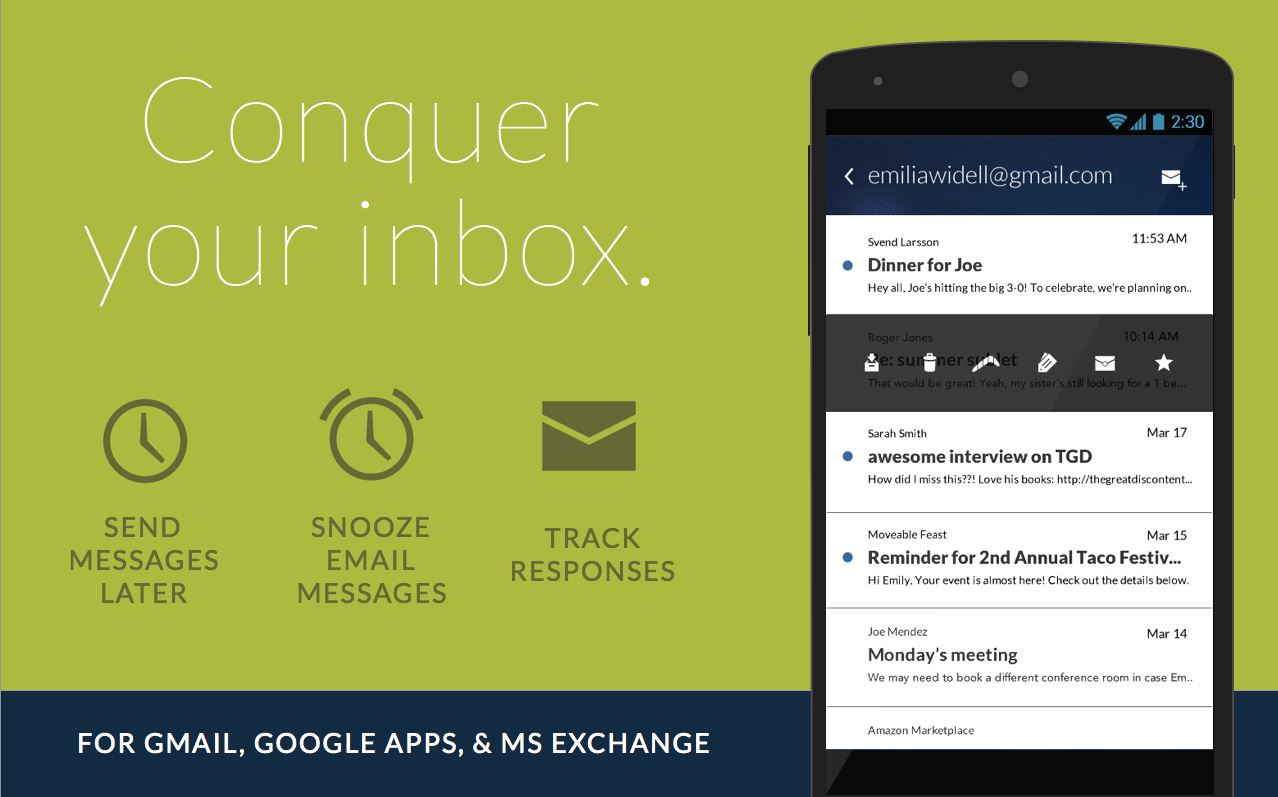
Boomerang, an application that acts as an add-on for Gmail, assists you with the organisation of personal as well as business-orientated emails.

From letting you set a notification pop-up if you haven’t received a reply on an email within a specified amount of time, to letting you ‘boomerang’ messages back to the top of your inbox at the time when you actually need to pay attention to it. But the main feature that makes this app a winner is how you’ll be able to schedule emails to send later on. This feature allows for you to write all your emails on weekends or late at night, and schedule to send it at a more appropriate time.

2. Oneflare for Business

Available on iTunesGoogle Play

Gaining exposure to new customers is always at the forefront of any growing and evolving small business. The Oneflare for Business app connects you with customers looking for your expertise; whether that’s pet grooming, plumbing, interior design or everything in between. The app which helps you find work when you want it, utilises a clean, simple layout that suits even the least tech-savvy user. Get notified instantly of available work within your area and respond with a detailed quote and even communicate with potential customers within the application itself. With more than 10,000 new jobs posted on Oneflare each week, it’s the smartest way to connect with customers and build your business even further.

3. Mint

Available on iTunesGoogle Play

phone apps for business small businesses

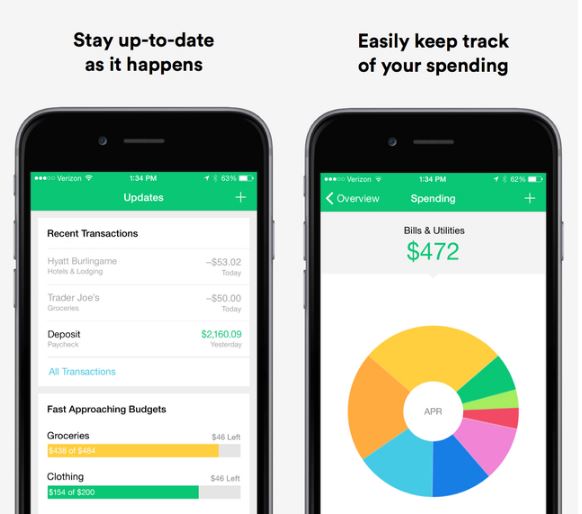
Mint is your go-to app for managing finances and potentially saving your business some dollars. Whether it be personal or business finances, the app allows you to securely consolidate your accounts, track how much you’re spending, and receive alerts when bills are due. Set reminders and finance goals, tag expenditures by category, and view your financial data as simple charts or Excel spreadsheets in a way that’s easy to digest.

4. Evernote

Available on iTunesGoogle Play

evernote app easy business

Evernote is a one-stop shop for all your personal and professional projects – take notes, create to-do lists, save voice memos, save photos, scan documents and even save sketches – and share it all with coworkers. Best of all, the app synchronises everything between your phone, tablet and computer automatically. Easy!

5. Invoice2Go

Available on iTunesGoogle Play

invoice2go apps make life easier

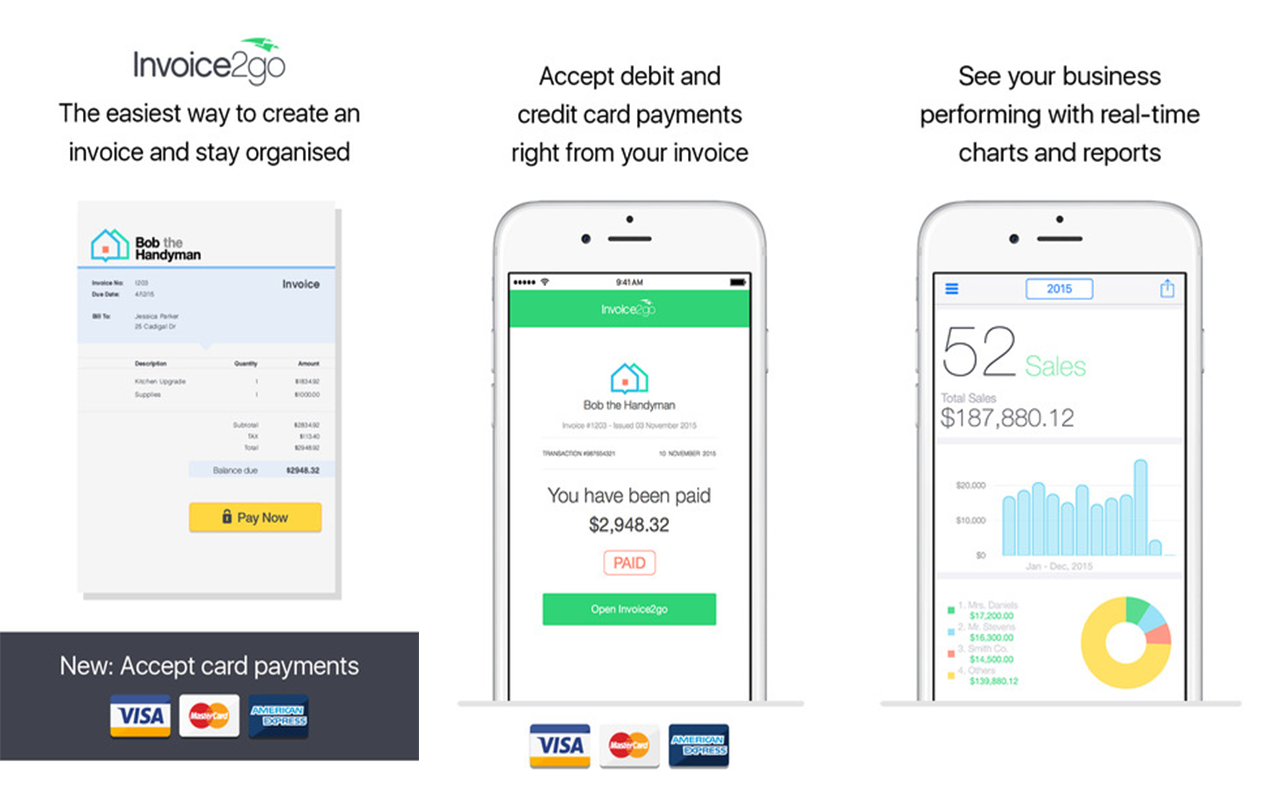
This cloud-based app makes invoicing and quoting a breeze for your small business. Invoice2Go is the ideal invoicing solution for all types of businesses. You can even invoice on the spot: right when you finish a job, email or print your PDF invoice by a click of a button right from the app.

6. Weebly

Available on iTunesGoogle Play

weebly

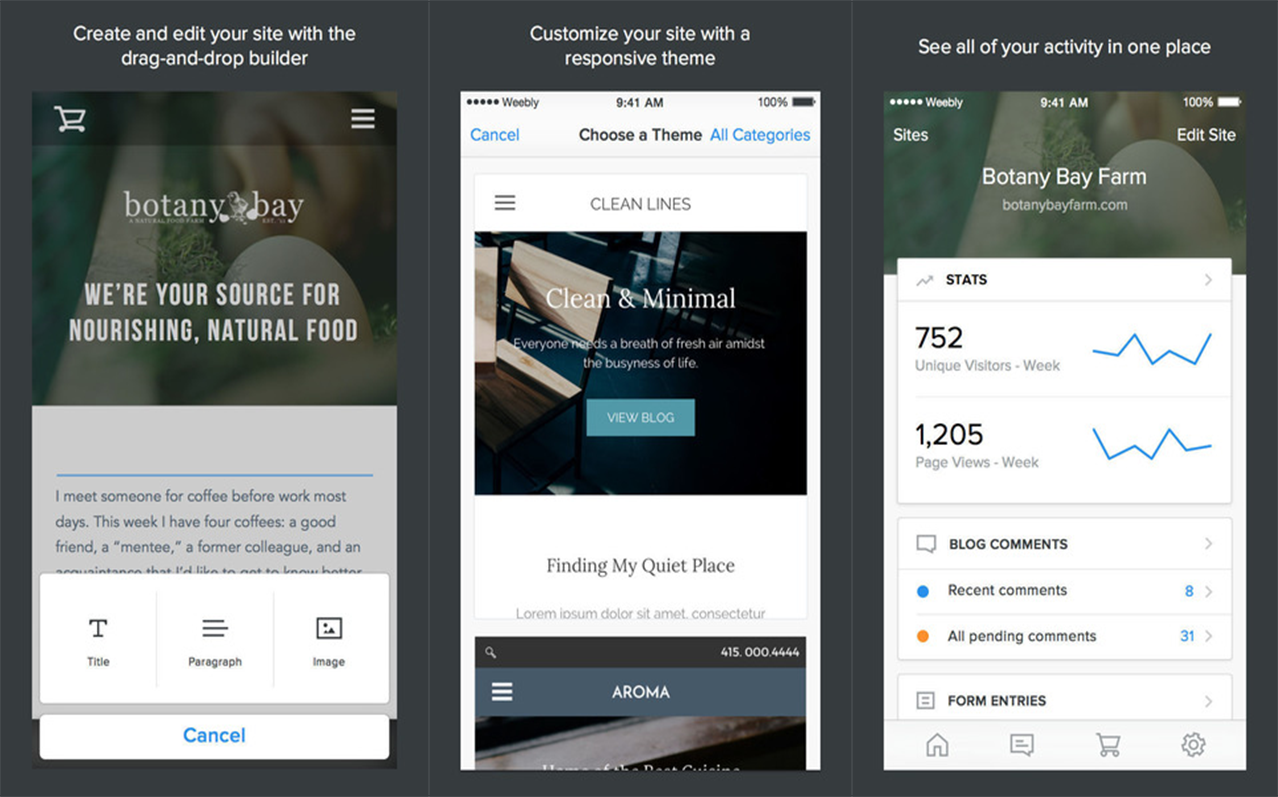
It’s the 21st century and your small business basically doesn’t exist without some form of online presence. Weebly makes website creation easy for the less creative-minded, you certainly don’t have to be a web-designer professional to use it! Simply drag and drop images, logos and maps into a chosen template, and add text wherever you wish. Publish your new website quickly and easily right from your tablet.

No one ever said starting your own business was going to be easy. However hard work and dedication can be made easier thanks to the help of a few useful apps.

Categories
Finance

Top 7 tax deductions for tradies

Tax deductions are a great way to claim back much needed cash at the end of financial year. There are many expenses that you are able to claim in your tax return, the top 7 tax reductions for tradies are explained below:

1. Transport expenses

As a tradie chances are your van or ute is your main method of transportation for taking you from job to job. As long as you can prove that you are using your vehicle for business purposes then you are able to claim back the purchase cost and any ongoing operating costs associated with the vehicle.

There are two different ways in which you can track your mileage in order to claim back the cost of running your vehicle for business purposes: the logbook method and the cents per kilometer method. If you choose to use the log book method you will need to prove your odometer readings for a time period of at least 12 consecutive weeks. By tracking the mileage you can claim the percentage of vehicle expenses allocated to business use, including running costs and depreciation. The cents per kilometre method allows you to claim $0.66 per kilometre on up to 5000 kilometres of business travel.

Source: Wills Plumbing And Property Maintenance Pty Ltd

2.  Tools and equipment

You can claim GST credits for the tools and equipment that you purchase to help you run your business. Items that cost up to $300 can be claimed as a tax deduction immediately. For items that cost over $300 you are able to claim a deduction on the items decline in value.

3. Clothing

If your profession requires you to wear specialist protective clothing such as steel capped boots, high-vis jackets, safety glasses and helmets can be claimed as a deduction. It is also possible to claim GST credits for the cleaning of your work clothes. Should the cost of cleaning exceed $150 you will need to provide receipts. For cleaning specialist work clothing on a regular basis you can claim a deduction of $1 for an entire load of work clothing; or $0.50 when the load is partially work wear.

4. Training courses, licences and certificates

If you’re undertaking any training courses or studying for any qualifications that relate to your trade, you are able to claim back the cost. You must be undertaking said qualification or training course to improve or maintain your skills in your profession only in order for them to be tax deductible.

5. Communications

You’re eligible to claim back the cost of work related phone and internet expenses. For claims more than $50 you need to work out the percentage that is used for work time only over a 4 week period, this can then be applied to the full income year. You will need to prove this with records in the form of bills, electronic summaries or diary entries.

6. Travel expenses

You can claim expenses associated with travelling for work purposes, such as accommodation, meals and transportation costs  i.e. taxi fares. These costs are deductible as long as you have proof of purchase in the form of receipts.

7. Union and association fees

The cost of union fees or subscriptions to professional associations are claimable in your annual tax return. Use your statement of fees or subscriptions paid as proof of your membership when submitting your return.

Other small business tax deductions

Everyone has tax obligations and must part with a percentage of their income at the end of every year. Business owners have additional tax burdens based on their business process and profit. It’s important that they conduct a break-even analysis and examine expenses and income carefully to determine how much they need to pay every year.

Source: Receipt Books

What is a small business?

Before you look at possible tax deduction options, you need to know whether your business is legally considered a small business. According to the government, businesses that have an annual turnover of $2 million or less are considered small. All of your businesses, including connected and affiliated ventures, are included in this bracket. This means you can’t split your business in order to remain under the $2 million mark.

Small business tax deductions you can claim

As a business owner, you know that you need to spend money to make it. Generally, the biggest portion of your income is funnelled back into your business to pay for essential business expenses and to generate more income. You can get tax deductions for most of the money you cycle back into your business. Many small business owners attempt to abuse this system and claim deductions for frivolous and unneeded expenses. Conversely, many miss opportunities to deduct tax and end up paying more than they need to. Here is a small business tax deductions list that most businesses can lay claim to:

  1. Advertising and sponsorship – Advertising raises awareness of your brand and brings customers to your doorstep, which generates income and profit for your company. Any investment you make towards advertising is tax deductible because it is an essential business expense. You also get tax deductions for advertising during the recruitment process, as hiring employees is also an essential business expense.
  2. Business-related travel – Travelling for business can be an expensive affair, especially if you need to travel to distant locations on a regular basis. As this travel is needed to help generate income, the expenses are deductible. You just need to maintain a clear record of your expenses. Preserve all your receipts, keep copies of your itinerary, record all your expenses and provide reasons for your travels. All of these expenses will be tax deductible. Make sure you don’t include any expenses that are counted as entertainment. For example, if you visit a different country and attend a concert during the business trip, you can’t claim deductions for the money you spent on the concert.
  3. Bad debts – Small business owners often struggle with bad debts, especially when they’re first starting out and have problems with cash flow. Some business debts have to be written off because business owners simply don’t have the resources to pay back the debt. This debt should be included as accessible income in the current year or previous year’s statements. It should also be written off as bad in the same year in order to claim a deduction.
  4. Borrowed money – If you need to borrow money you can claim deductions on that. You just need to prove that the money you borrowed helps provide accessible income to your business. Expenses on borrowed money can be legal costs, valuation fees, overdraft guarantee fees, registration fees, etc. These deductions are different from the deductions you get for paying interest on borrowed money, so make sure to claim both.
  5. Fringe benefits – If you provide fringe benefits to your employees, it’s considered a business expense and you can get tax deductions on it.
  6. Repairs and maintenance – Repairs and maintenance of your commercial property is an essential business expense and helps generate income as well. You need to make sure these expenses aren’t considered “capital costs.” You can claim deductions for thing like painting, plumbing, cleaning, up-keep, machine servicing and maintenance.
  7. Insurance – A number of insurance schemes are tax deductible as they’re considered essential business expenses as well. For example, you can get deductions for Worker’s Compensation, fire, public liability, vehicle, theft and loss of profit insurance premiums.
  8. Superannuation funds – You get deductions for contributions you make to your employee’s superannuation funds. You can also get deductions for your own superannuation funds.
  9. Salary – Salaries and wages paid to employees and workers are tax-deductible because they contribute towards your company’s revenue and profit. However, you need to keep in mind that all salaries are connected to your business and generate profit for your business. Sole traders can’t claim salaries paid to themselves. 
Categories
Design & technology

Top 5 website design mistakes

The internet provides unlimited access to knowledge which means that just about anyone can teach themselves how to do web design. Unfortunately, this can have a negative impact on the effectiveness of the DIY website they create as a result. Here are several common web design mistakes small businesses make that must not be overlooked.

1. Cramming too much on the homepage

While you may be in a rush to present your audience with all you stand for and show them everything you have to offer, trying to cram too much on the homepage usually isn’t a great idea. There are two major reasons behind this. First, it will make your navigation counter-intuitive, seeing as your audience won’t know where to click. This results in bad user experience. 

Secondly, every single element you include requires an additional HTTP request. This can slow down your website significantly. Due to the fact that your audience expects a website to load within the first 2 seconds (on average), this might become a significant problem. If your website fails to load within the first 4 seconds, as much as 25 percent of your audience may move on. It’s also a negative signal for search engines.

2. Failing to introduce yourself

One of the greatest mistakes you can possibly make in your web design is assuming that the visitor will know what you are all about the moment they click on the link. Sure, some of your audience members are more intuitive than others, while a great deal of them knew who you were even before they clicked the link, however, this should not be your initial assumption. Your design and your content must first be oriented towards the introduction.

Web designers can optimise your website for all types of devices / Source: Webilicious Web Design

3. Rushing with your CTA button

Every website out there has an agenda. You may want your visitors to buy a product, leave an email, subscribe to your newsletter or simply encourage them to learn more about the topic at hand. Unfortunately, pushing them to make this decision before they are ready to do so may backfire. In order to avoid this, make sure to introduce yourself and show them what you have to offer, before presenting them with your call-to-action (CTA) button.

4. Failing the consistency test

These days, more people are browsing the internet through their smartphones than through their desktop setups. On the other hand, more people use PCs than tablets, which puts you in a complicated situation design-wise. Sure, appealing to one audience may seem a preferable choice but you simply cannot allow yourself to ignore all the rest. Your website needs to show consistency in both visuals and functionality across all devices and failure to do so will impact negatively on user experience.

Contact local web designers

5. Ignoring white space

Earlier on, we talked about cramming too much content from the perspective of the website loading time. In addition to this, ignoring the white space and inserting too many interactive elements into your design reduces the readability of your content. Separating paragraphs within your content and leaving enough space between different elements of your webpage is something that will make it more visually appealing. In this way, you are increasing the chance that people (especially those on mobile devices) will actually skim through or read your content. In a world where 8 out of 10 people don’t read past the headline, this is very important.

By acknowledging these important failures of web design, you are ensuring that your website will make a great first impression on your audience. In this way, you are also increasing its reach and its average conversion rate. Finally, while the above-listed principles are quite intuitive, a lot of DIY designers tend to ignore them. Nonetheless, keeping them in mind at all times can ensure your web design is always on point.

Categories
News & updates

3 ways to progress your business career

Whether you’re running your own business or working in a role for an organisation, there are a few things you can pay attention to, ensuring you’re on the path to continual progression. The number of small businesses in Australia is growing; according to ABS data, there were 1.2 million sole-trader businesses in Australia in June last year, up 32,000 over the previous two years.

According to social commentator, Bernard Salt, “The bottom line is that business activity is blossoming across suburban Australia where a nation of tradies, professionals and shopkeepers is building and servicing whole new communities.”

If you’re a business person, it’s sometimes tempting to put your own needs last as you focus on your business’ goals. This is rarely a good idea. Here are three strategies you can employ to progress your business career and keep continual improvement on your radar.

#1: Check your mental health

Mental health in the workplace is a continuing growth focus for many sectors of government. An employee or worker who looks after their mental health takes fewer sick days, is more productive and has a greater impact on happiness and stability.

According to the Human Rights Commission, a total of 3.2 days per worker are lost each year through workplace stress and stress-related workers’ compensation claims have doubled in recent years, costing over $10 billion each year. It quite literally pays to keep your mental health in check.

At work, you should be on the lookout to identify possible workplace practices, actions or incidents which may cause, or contribute to mental illness and stress, and then you need to take actions to eliminate or minimise these risks. Take frequent breaks from work, speak to a medical professional if you feel your mental health could be improved; and reach out even if you feel the issue you are experiencing is minor.

Organisations like Headspace have now begun to offer programs specifically tailored to people who are at work, and might feel too stretched to concentrate on their mental health. Simply, employers are obligated by law to provide a safe and healthy workplace, and this organisation provides a helpful list for employers and employees to offer simple strategies that can be incorporated daily to make the lives of workers more safe, satisfying and secure.

#2: Look after your fitness

One sure-fire way to keep your health in check is to look after your physical fitness. Often, the more absorbed we become in a business role, the more we might ignore the basics of our own physical health.

The ABS recently reported that up to 2015, a staggering 63.4% of Australian adults were overweight or obese, well over half of our nation’s population. That’s almost two in three adults. Look after your fitness and make a focus on good health as part of your daily regime. This not only promotes physical health, but mental wellbeing as well.

A recent study by Harvard looked at circadian rhythms in the workplace. Often, or natural life’s rhythms are ‘out of sync’ with our working lives, adding to stress and bad habits at work, that can translate to other areas of our lives and affecting our general fitness. The study concluded that, “Managers who want to maximise their employees’ performance should consider this circadian rhythm when setting assignments, deadlines, and expectations,” according to Harvard Business Review.

“This requires taking a realistic view of human energy regulation, and appreciating the fact that the same employee will be more effective at some times of the day than others.”

Take your lunchbreaks and don’t eat at your desk. Plan to leave ‘on time’ most nights of the week and avoid unnecessary overtime. Take holidays and spend intervals in nature. Make exercise part of your life and follow the national guidelines on consumption of fruits and vegetables. Concentrating on your all-round health will make you a better, more efficient business worker in the long run.

#3: Enjoy the flexibility of continual learning

The business landscape in Australia has never been more fast-paced. Continuous improvement is now part of most business courses as goalposts and KPIs become more fluid. Aiming to constantly improve your skillsets will future-proof your career, whether you run your own business, or work in someone else’s.

A benefit of the digital age, now there are so many avenues available to continue your learning while on-the-go. Many online courses can be studied from anywhere you have an internet connection, and flexible start dates and work-at-your-own-pace formats are now increasingly common and accessible.

Online providers such as Upskilled offer dozens of courses in key areas such as business, information technology, accounting and finance, human resources and project management. Many of these courses can be completed at your own pace, so you can take them as slowly or as quickly as you have time for, structuring your learning around your other commitments. Check out Upskilled’s range of nearly 100 courses in areas as diverse as technology sustainability; leadership and management; and social media marketing.

Progress and protect your future

By employing the three strategies above, people working in business can make the most of the time they have to think about their futures in the industry. Look after your mental health, keep a focus on your fitness and aim to learn new skills via flexible learning.

Success is never guaranteed in all ventures but personal success can take on many forms. There is a quote that says, ‘Success is where preparation and opportunity meet’. Learn to put yourself and your needs at the top of your to-do list and gain the satisfaction of a job well done, whatever type of business you work in. Start today and future proof your career by focusing on both your goals and growth.

Categories
Finance

What’s best for a small business to outsource?

Small businesses have a limited budget and can’t always afford to have full-time employees on their payroll to handle different tasks. This doesn’t mean you need to handle all essential business tasks on your own. Small business owners should focus most of their energy on business tasks and processes that require their particular skill and attention.

They can delegate ordinary business processes to a third party through outsourcing. You can maintain a lean organisation, stay within your operations budget and still get work done.

What can you outsource?

Different businesses have different requirements so it’s important to study your business processes, understand your budget and look at your employees’ skills and abilities before you determine what you should and shouldn’t outsource. Mentioned below is a list of services you can easily outsource. You can study the pros and cons of every option and make your decision.

HR outsourcing

When you have employees, you need to manage their needs and requirement though a Human Resource system. The HR department of a company maintains employee records, keeps track of their insurance cover, performance reports, leaves and absences, complaints and requests and other such information. All of these records need to be properly managed and maintained.

HR is also responsible for employee development and helps organise training. If your employees don’t have proper support from HR, they might not be inclined to remain in your company and seek employment elsewhere.

As a business owner you need to provide this support system and you can do it by outsourcing the task to an external HR company. They will handle all aspects of HR support and development, so your employees will be satisfied and perform well.

Payroll outsourcing

Business owners often underestimate how complex payroll management can be. It goes beyond keeping a record of employee payments and salaries. You need to keep track of their working hours, record leaves, bonuses and make sure all the employee information is up-to-date. Mistakes can lead to penalties, fines and sanctions, so it’s important to keep a good payroll record and ensure all the information in it is accurate.

One of the best ways to achieve this is to hire a professional bookkeeper and use a software program to manage the data. If you outsource payroll, you don’t need to worry about the details involved. You can trust the outsourcing professionals to keep all the information up-to-date and ensure there are no mistakes in the records

IT outsourcing

Modern businesses, especially small businesses, rely heavily on their IT systems. They use IT to get work done, store information, manage business processes, handle marketing and provide customer support. Unfortunately, IT systems aren’t infallible and can develop problems like viruses, data loss, software glitches, hardware issues, etc. Big companies have IT departments that can handle these problems and provide essential maintenance.

Smaller businesses can get the same security by outsourcing IT support and maintenance. IT support companies have expert technicians on their staff that can handle all kinds of computer and IT problems. They offer both remote and on-site maintenance and repairs.

IT support and maintenance companies also provide additional services like cloud system, processing power from their server, hosting services, etc. You don’t need to invest in data banks and servers to store your information; you can simply purchase one of the many cloud plans offered by IT support companies

Small business bookkeeping

All businesses need to keep track of their expenses and income through bookkeeping and accountancy. If you don’t keep track of your financial information, your business will suffer and eventually fail. You also need to maintain accurate financial data in order to file your taxes with the government at the year end. If you make mistakes and don’t pay as much tax as you’re supposed to, you’ll face penalties, fines and may even lose your business license.

Unfortunately, bookkeeping isn’t easy, even for small businesses. You need to keep track of all expenses, look at your cash flow, maintain a record of your income, determine what expenses are tax deductable and perform other related tasks. While accounting software can help you maintain the records, it’s not easy to consolidate all the information at the end of the financial year.

How to hire an accountant that meets your business requirements? A well-trained and experienced accountant can help you consolidate information, determine your tax burden, look for tax deductable expenses and provide other financial advice. This can be easily outsourced as well.

Contact local bookkeepers

Legal process outsourcing

Businesses need to handle a number of legal processes like registering trademarks for their brand, developing terms and conditions, creating contracts for customers, employees and business associates, etc. You need advice from a legal professional with experience in the industry to ensure there are no mistakes. Errors in legal process management can lead to law suits and other legal difficulties, so it’s a good idea to hire a company to keep track of all legal aspects of your business.

There are a number of third-party companies with excellent legal experts and lawyers on their team. They can advise you on all aspects of your business and ensure you stay on the right side of the law.

Business process outsourcing

A business is a complex machine with several moving parts. All of these parts must function well and without interruption for the business to move forward. Every business has a number of background processes like customer service, sales, marketing, internal maintenance and repair, etc. A business owner must keep track of these processes and ensure that they’re on track.

Thankfully, you can outsource a large number of these processes as well. For example, you can hire a company to clean and maintain your commercial property instead of creating a permanent cleanup crew.

Wrap up

Outsourcing is easy and affordable, so all you need to do is find a reliable service provider to handle all your processes. Outsourcing allows your business to grow at a reasonable pace and minimises the initial investment. You can direct your resources to areas of your business that truly need it.

Categories
Finance

How the tax on dividends is calculated

What is an investment?

An investment is an asset that is purchased with the intention of making a profit in the future. The asset can be stocks, a piece of property, or something such as precious metals or coins. You can wait to receive payment when the asset is sold, or you can gain a profit from it along the way. Some examples of these types of assets include rent from property, dividends from shares, and interest from a bank account. The ATO treats different kinds of assets differently, and you can soon see your profits dwindling when tax time comes around if you are not careful.

What investment income must you declare?

  • Interest: When you open a savings account or other interest-bearing account at a bank, you will receive a certain percentage of additional money from the bank. This is typically a certain percentage based on the amount of the account.
  • Dividends: The shareholder of companies receives dividends. They are taken from profits and usually paid on a semi-annual basis.
  • Rent: Rent is money that someone pays you for living on your property. It is in the form of a regular monthly income.
  • Managed investment funds: A managed investment is an asset, such as a trust, that someone else manages for you. Some of them are set up to pay regular sums of money. Some different types of trusts include cash management, money market, mortgage, unit, or managed fund.
  • Capital gains: Capital gains are realised when you sell an asset, such as when you sell your home or a stock. A capital gain is a profit that you earn from the sale.

Dividends:

Dividends are one of the most misunderstood assets of many people. Let’s start from the beginning.

When a company needs money for something such as an expansion, new equipment, or to increase capacity, they have several different tools to use to obtain what they need. They can go to a lending institution and get it through traditional means, apply for grants, or try to find a private investor.

Another method that they have is to offer shares of their company up to the public. The public can buy shares with the hopes of making a profit in the future when they sell them. In this case, the public acts as the lender. Some stocks pay dividends, which can provide regular income for as long as you hold the stock. Here is a bit more about what a dividend is and how it works.

How do they work?

When a company makes a profit, they can choose to keep some or all of it. They can also choose to make owning shares in their company more enticing by sharing some of the windfalls with their shareholders. These funds are typically distributed to shareholders in July and December.

How are they paid?

The most common form of dividend payment is in the form of cash. This means that for tax purposes, they are taxes as a cash payment. This can have significant tax repercussions. Sometimes, the dividends can be paid through a trust or share club. Also, you can arrange to have the dividends reinvested instead of being sent to you. All of these options have different tax consequences.

Why are dividends so important when declaring investment income?

If you are a shareholder, when the company makes a dividend distribution, it counts as income for the shareholder. It must be reported as such on taxes. It is always wise to keep your dividend statements because you will need them when you file your taxes.

How are dividends taxed between residents and non-residents of Australia?

How dividends work depends on whether you are a resident or non-resident. A non-resident of Australia can own stock in an Australian company. Residents and non-residents are taxed differently and have different tax burdens when it comes to dividends.

If you are a non-resident and became a resident later in the year, you might not have had the proper withholding taken out. In this case, you need to report the dividends on your tax form. If you are a non-resident, you cannot use a tax offset for franked dividends. However, you can use it to offset other Australian income. You will have to pay a withholding tax on unfranked dividends. You do not have to pay tax on unfranked dividends because it is considered conduit foreign income.

If you are an Australian resident, you will pay taxes based on an imputation system. This system dictates how the taxes paid on company profits should be allocated. It determines whether the tax burden belongs to the company, the shareholder, or a portion to each. This system is to make sure that a double tax is not paid on the same profits by two different entities.

A tax accountant can help you to maximise your profits from investments / Source: ASR Partners

What is the difference between franked and unfranked dividends?

When a company makes a profit, they must pay a certain amount of tax on it, typically around 30% for most companies. When an individual shareholder receives income via dividends, they pay a tax on share profit. Without the franking system, double tax jeopardy can occur where both the company and the individual pay taxes on the same profits.

When shares are franked, it means that the company has paid the taxes on the shares held by the individual. If the individual receives franked dividends, they receive a credit for tax on shares that they own. The difference between franked shares and unfranked shares is who is responsible for the tax burden on the profits.

Franked dividend:

To receive a franked dividend, you must purchase franked shares. These are shares that are already marked as having the taxes paid on them. Dividends can be fully franked or partially franked. A fully franked dividend means that the shareholder will receive a full tax credit for the shared. A partially franked dividend means that the tax burden is shared between the company and the shareholder. The franked dividend tax rate depends on which tax bracket you fall into based on your total income. If your tax rate is below the corporate tax rate of 30%, the ATO will refund the difference to you.

Unfranked dividend:

Unfranked dividends are just like regular stocks or investment instruments. You will have to pay the full amount of tax on any dividends or other taxes that you earn from them. They count as income and will increase your overall revenue, which could bump you up into a different tax bracket.

What are franking credits?

Franking credits refer to the offset that you receive when your tax bracket is less than what the company paid for the credits. For instance, if you own 1,000 shares of a company and the company makes $5 per share in profit. They will have to pay 30% on those shares, which is $1.75 per share. This leaves $3.50 that they can keep or distribute to shareholders as dividends. The shareholder would then receive a 30% imputation credit. This means that for 1,000 shares, the shareholder gets $2,500 in taxable income. Of this, $1,170 is dividend income, and $750 is franking credit.

How to hire a tax accountant

As you can see, the topic of dividends can become complicated when it is tax time. Hiring a good tax accountant can help you wade through the regulations and keep the amount to which you are entitled. Here are a few tips for hiring a tax accountant.

How to create an accurate estimate

You can help your tax accountant by taking a few simple steps. These steps will help your professional make sure that you get the proper franking credit for your stocks.

  • Keep your dividend statements and other income records in a safe place.
  • Make your accountant aware of any changes that have occurred, such as residency.
  • Keep your receipts for any buying or selling transactions.

Licencing and qualifications

To practice in Australia, a tax accountant must meet at least the following minimum requirements.

  • Complete a Bachelor’s in some form of accounting.
  • Pass the Certified Public Accountant (CPA) program.
  • Be a member of a qualifying trade organisation.

How to save money hiring a tax accountant

Everyone likes to save money at tax time. Here are a few tips to help you save on accounting fees and the taxes owed.

  • Save every receipt and write down what it is.
  • Keep your files organised so that your accountant does not miss anything.
  • Ask about fees before you agree to an accountant’s services.
Categories
Finance

Tax on rental income

The tax on rental income would typically be categorised as accessible, but you’re entitled to claim tax deductions for the different expenses associated with having people rent out the property. The amount you have to pay in taxes depends on how much money you earn, which means you may need to set aside 20 to 49 per cent of your earnings for taxes. What you owe also depends on the amount of tax that is deducted from your other sources of income. This makes it necessary to obtain help from a tax agent to ensure the calculations are accurate and you’re informed of the laws.

Short-term rental hosts must pay Schedule C or self-employment tax, which includes social security and Medicare tax. You can also expect to pay local and state occupancy taxes on your rental income. You have the option of paying PAYG instalments if your income is inconsistent or you want more convenience. It means you won’t have to worry about getting a big tax bill at the end of the year.

What deductions can Airbnb hosts claim?

Maintenance

The money you spend to maintain the property or perform repairs is eligible as a tax deduction, which makes it necessary to keep thorough records and recipes. You can write off the cost of repairing a leak or replacing the new roof to maintain a desirable, safe, and functional setting.

Utilities, fees and insurances

The money you spend on water, power, and sewage are all tax deductions to report. The homeowner’s insurance or private mortgage insurance (PMI) you pay each month is also eligible. The fee you pay to Airbnb or other websites can also be included in your tax dedication and should consist of the dates of your payments. You can also report fees you paid to collect the rent.

Marketing and promotion

Whether you pay for Facebook or Instagram, the money you spend to promote your Airbnb and attract more renters is considered to be deductible.

Financial and asset-related issues

You can also deduct any items stolen from the property or if the furniture was damaged when you had people renting out the property.

Personal costs of managing the property

You may have personal expenses associated with managing your Airbnb, which includes upgrading the furniture or paying for cleaning services.

Council rates

Keep thorough records of your council rates, which is known to fluctuate each year and can be written off.

Claiming deductions:

How do you claim them?

You can claim your Airbnb tax deductions by obtaining the help of a tax preparer and by itemizing the tax deductions. You’ll need to prepare a Schedule C attachment, which is considered to be a separate calculation from your net profit. Avoid deducting anything that you do not have proof of paying.

How much can you claim?

You can only claim the number of days or weeks you rented out the Airbnb, which may be four weeks or 50 weeks, depending on how much business you received. You can only claim what’s related to running the Airbnb and can’t claim anything associated with your personal use of the home.

Airbnb & capital gains tax (CGT)

Pros

  • You can obtain a lower Airbnb and capital gains tax rate when you sell the property.
  • Defer capital gains tax when selling one property and buying another.

Cons

  • It doesn’t apply to your inventory.
  • It doesn’t apply to corporate income.

Airbnb & goods and services tax (GST)

Many people may assume they need to be aware of GST on residential rent if they use their property as an Airbnb. GST doesn’t apply to residential rentals, which means it’s up to you to add the amount to your rental property when reporting it to the government. You aren’t liable for GST on rent for the rates you charge and the money you collect. This also means you also can’t claim any Airbnb GST credits for any associated costs.

Byron Bay – a popular location for Airbnbs / Source: Shuterstock

Tips for Airbnb hosts:

Keep all of your receipts

Keep every paper receipt and digitally scan everything, so you have evidence of your expenses if the IRS contacts you in the future.

Obtain tax advice

It can be easy to owe different types of taxes for your Airbnb. This makes it necessary to talk to an expert to avoid missing anything. A qualified tax professional will be able to take a close look at your earnings and determine how much you owe.

Depreciate your property

Many people also forget to consider the depreciation of their property and any money they spend to upgrade the kitchen or remodel the bathroom.

Record your bookings

You need to track all of your bookings and also vacancy dates throughout the year so you can report how many times someone uses the property. This will ensure your reported earnings and the taxes you owe are accurate. Tracking how often the property was rented can allow you to communicate your deductions for the Airbnb taxes.

How to hire a tax accountant

Read online reviews

Consider looking at a review of former customers online to determine how respected a tax accountant is before you use their services. Look for someone with a high rating without many complaints to ensure you hire someone reliable and experienced.

How to create an accurate estimate

Determine your different sources of income

Consider the number of places you earn an income. The more income you earn in different areas, the more time it’ll take to prepare your taxes, which will mean you can expect to pay more for tax preparer services.

Licencing and qualifications

You’ll end up paying more for tax accountants with more credentials and experience because they’ve spent the time and money to become educated and credentialed. If you hire someone reputable and with experience, it can allow you to save more money. Furthermore, it will ensure they’re aware of all of your Airbnb tax benefits.

Categories
Real estate & moving

10 moving office tips for employees

Moving office takes time, luckily, it is a burden that everyone in the company shares equally. With the right planning, organisation and coordination, a lot can be achieved with as little effort invested as possible. The work must carry on at the new workplace location, so having everyone exhausted by the move may result in turnover you don’t need. Therefore, everyone must play their part in this process. Here is our office moving checklist for employees.

1. Tell all your clients

The first thing you need to keep in mind is that this move isn’t just affecting you. For instance, what happens in a situation where an important client decides to visit you, unannounced, at your old location, only to find you absent. In this case, they might get the impression that they are not important enough to get a timely notification of your company’s relocation. To avoid this, contact your clients in advance and let them know you’re moving office, including the new office address, change of operating hours and telephone number (if any).

2. Make an announcement

When a company relocates, there are so many things to do. Most importantly, your workforce needs to make an important choice whether they will relocate with your business or quit. In a situation where the move is across the country, it isn’t that odd to assume that some staff may decide to leave, yet this is something that needs to be discussed in time.  It is vital that the employee responsible for spreading this announcement (most commonly someone from HR) does this to give employees enough time to work their notice period and recruit for new staff. This usually means weeks or even months in advance.

Source: Balanced Business Accounting

3. Hire office movers

As for the move itself, contacting professional office movers in advance to avoid the hustle. The office manager is recommended to have the full list of the items, including computers, furniture and storage, that are transported to a target location. It may be more cost effective to purchase new office furniture and equipment at the new location than to pay for the relocation of goods from your existing office. You can either sell these items or donate them to a charitable organisation. It is recommended to get an itemised quote from the office movers to work out what is the best course of action for you.

4. Get the packaging material

Simply contacting office movers isn’t enough, it is also your job to secure all the materials that you’re going to take to your target location. For this, you need to get a sufficient amount of boxes, duct tape, labels and other important items. It is important that you are as organised as possible during this process.  It is common for many items to get misplaced and mishandled during the move as people don’t know the importance of the contents of the box. For this reason alone, some companies purchase, borrow or rent out a label printer.

5. Prepare the new destination

Apart from worrying about your current office, you must also adequately prepare your new destination for your arrival. So, if one of those destinations is Sydney, for example – the next sensible move would be to hire a Sydney removalists who satisfy your company’s standards. With the removal services on your side, you can prepare the office for your inevitable arrival. Aside from this, the office in question might require some additional work especially if you have complicated computer or server setups, which is why you might also want to inquire about local contractors.

6. Official address change

The issue about relocation bears some legal complications, as well. Your company is probably registered at your current location so this will have to be changed. Next, you also want to cancel all subscriptions you have at your current location or just redirect them to the next one.

7. Situational company name change

In the same manner, you might be also compelled to change the name of the company. Imagine a scenario where your company name has the name of your city or region as the part of the phrase. Furthermore, your entire marketing might suffer from it, yet the consequences you will experience at the target destination if you fail to do so are even greater. Sometimes, it might be a good idea to organise a great brainstorming session amongst the team and try to figure out how to deal with this situation as painlessly as possible.

8. Think about the insurance

Another thing you should take into consideration is the one of insurance of your equipment, office and company in general. Sure, this is something that is already handled at your current location but you need to ask yourself one thing: “Does the insurance on our computer equipment and furniture cover any damage made during the office move”. Pointing this out to some of your supervisors might earn you some extra credit with them, as well as save your company a small fortune in repairs and re-purchases. It might also be worth your while to inquire about things like plumber and handyman insurance types, for your future headquarters.

9. Organise the packing

In one of the previous sections we mentioned the issue of acquiring the right packing materials and while this helps you immensely in the process of packing, there is still a lot you have to do. In order to ensure nothing is accidentally misplaced or mishandled, a manager might want to hire people responsible for packing. Each of the people responsible might have their own area, which includes certain items or types of items. With the right organisation, everything becomes considerably easier.

10. Try to alleviate the tension

Finally, the process of moving office is always a difficult one, especially since some of your partners, employees and clients may abandon you for good. Therefore, it is a job of every responsible team member to try and alleviate the tension around the office as best as they can.

FAQs

What to do with office equipment that you don’t need at your new office?

When moving offices it isn’t uncommon to have extra furniture that doesn’t quite fit into the new office. Depending on your financial and logistical position, you may want to try one of the following avenues:

  • Sell your unwanted office furniture online or in the classifieds
  • Donate it all to a local charity or another business starting up
  • Store it. This might be helpful if you’re looking to expand in the near future, however, the cost for storage may quickly outweigh the benefits.

How to safely move computers and electrical equipment?

Quite possibly the most important aspect of any move is ensuring the computers and computer networks are transported safely. Computers will need specialist moving equipment to ensure they do not receive any damage en route to the new office. Taking special care to preplan the move and how cords and accessories will travel will decrease your downtime at the other end.

Here are a few things to consider when moving your computers:

  • Wrap them well using special padded wrapping.
  • Consider how the computers will be moved. Specific computer moving trollies can make the process safer by reducing vibrations from the road during moving.
  • Is your equipment insured while in transit? Check with your insurance company and make any adjustments to your policy if needed.

Wrap up

By following this office move checklist, your moving office experience will become as simple and efficient as possible. Sure, there are always some unforeseen difficulties you might encounter along the road, but as you progress through each of the above steps, you will feel the weight on your back getting lighter and lighter.