Categories
Real estate & moving

How to pack your house for a move

Moving house can be stressful, especially if it’s a long-distance move. You need to take care of the practicalities and deal with the emotional impact of leaving your familiar surroundings for a new place. It’s important to plan the move carefully and keep track of all your possessions.

You need to make the arrangements well in advance to ensure the move happens smoothly and on schedule. A competent moving company can help you through the process and ensure your possessions reach your new home unharmed.  In this article, we share our best moving house packing tips.

How to plan your move

Planning a move is relatively easy, but executing the plan is a little more complicated. The key to a successful move is to create a strategy and stick with it. You should also make sure your family is aware of the plan and understands their roles in the moving process. This is especially important if you have children.

Choose who carries out the move and how

People who move are often on a limited budget and have recently made a big financial commitment to a new property. They want to save as much money as possible and assume that a DIY move can help them do that. Unfortunately, that can prove to be very problematic and end up costing more money, especially if you have to make multiple trips in your own vehicle to carry out the move. Here’s what you can do instead of handling the entire move yourself:

  1. Consider back-loading – In this option, your possessions will share space with other people’s belongings during the move. You only pay for the square metre area you use during the transport. This can help you save a significant amount of money.
  2. Handle the packing – Most moving companies will pack your possessions for you at an additional cost. If you’re on a tight budget, you can skip this service and pack your belongings yourself. You can source free packing materials from several places like your local schools, local shops, friends who have recently moved, recycling centres, etc.
  3. A full move – If you’re on a tight schedule and need to carry out the move as quickly as possible, you should consider hiring the complete service. The movers will handle everything – packing, loading, transporting, unloading, and unpacking. Some movers will also disassemble large furniture and reassemble it if required.
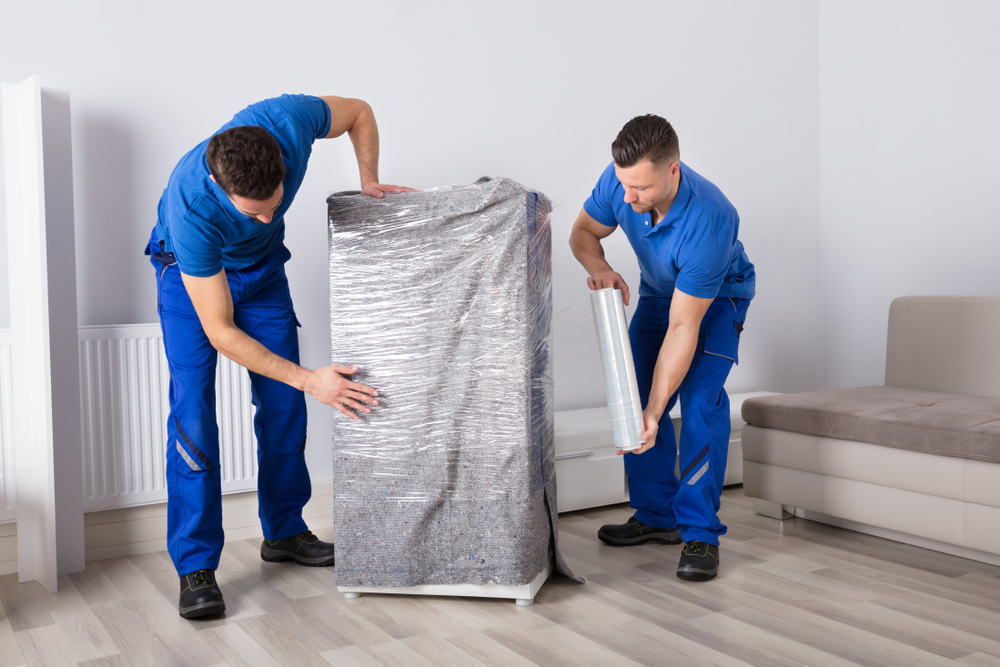
Removalists offer different levels of service depending on your needs / Source: Jake Fast Removals

Once you have made your choice regarding the moving service, you need to find a reliable mover with a good reputation, get quotes, and schedule the move at a convenient time. It’s important to book a mover at least three weeks before you intend to move, especially if you plan on moving during summer. Last minute moves are often expensive and cumbersome.

How to pack your possessions

The next step is to sort through your possessions and organise them into three different sections. Moving is an excellent excuse and motivation to get rid of things you don’t need.

  1. The “keep” section – This section consists of all items that you need and value. These items should have a place in your new home and serve a purpose. For example, if you have a baby grand piano that no one plays, you should consider selling it or donating it instead of transporting it to your new home. On the other hand, if you have an antique clock that fits in perfectly with your new home’s decor and has sentimental value you should include it in your keep section.
  2. The “donate or sell” section – This section is reserved for non-essential items that are in good condition. You can either donate these items to a local charity or sell them on online marketplaces like Gumtree and eBay. Selling the items will give you some extra money at a time when you have a large number of expenses.
  3. The “discard” section – Some items are just too damaged or worn to sell or donate. You need to dispose of these items safely, especially household cleaners, medications, abrasives, and other such substances. Come up with a solid disposal plan for all of your possessions in this section and discard them thoroughly before you’re due to pack for your move.

How to pack for a move

After you’ve sorted through your possessions, start the packing process. It’s a good idea to spread this out over a few weeks instead of rushing through it in the final week before you move. Here are some tips on how to handle the packing for your move:

  1. Collect the material – The first step is to collect packing materials like cardboard boxes of different sizes, as well as specialised boxes for glassware, dishware, electronics like televisions, etc. You’ll also need packing tape, box cutters, plastic wrap, packing paper, bubble wrap, ropes and strings, permanent markers, and labels. You can find all of these items online or in your local stores. Some moving companies provide a certain amount of free packing materials to their customers once they have a confirmed booking
  2. Pack one room at a time – You should keep the unpacking process in mind before you start packing your possessions. If you pack one room at a time and label all boxes properly, you’ll have an easier time unpacking at your new home. Packing one room at a time is also less stressful and ensures you don’t miss anything. You can maintain a list of all possessions in the room, so they’re easier to track during transportation.
  3. Pack non-essential items first – Pack non-essential items that you won’t need during the weeks leading up to the move first. If you pack the essential items, you’ll be forced to look for those things in your packed boxes repeatedly which can cause undue stress. Make a list of items that you won’t need during the weeks leading up to the move and pack them well in advance.
  4. Label everything and place a list of items on the box – After you’ve finished packing a box, label it carefully. The label should contain the name of the room, the name of the person those items belong to, whether the items are fragile, and a list of the items placed in the box. The latter will be useful if you need to retrieve something from the packed boxes as you won’t need to open all of them to look for something. You can refer to the list to see if the item you need is on it.
  5. Keep track of essentials – Essential items can easily become lost during the packing and moving process, so it’s important to keep track of them. These items include medications, documents like medical reports, identification papers such as passports, school paperwork, insurance paperwork, etc. They should be stored where you can easily find them.
  6. Pack essentials – Pack the most essential items a day or two before the move and make sure you have an overnight bag with your toiletries, change of clothes, medication, chargers and mobile devices, etc. This means you won’t have to deal with unpacking immediately after the move.

How to pack fragile items

There is absolutely a right and wrong way to pack fragile items. First things first ensure your cardboard boxes are still strong and sturdy. Reusing boxes from your last move might seem like an easy way to go, but cardboard boxes have a shelf life like anything else, so make sure they are still strong enough for your fragile items.

A good way of ensuring your fragile items arrive safely is to pack your bedding in with these items. Perhaps a doona in the bottom of the box, and a couple of pillows between pieces will ensure any knocks are absorbed in the bedding, and not in your breakables.

For glasses, mugs and cups ensure they are all wrapped separately. This can be a time-consuming task, but ensuring the glassware isn’t touching other glassware will significantly increase the chances of it arriving safely.

How to pack books

Depending on how many books you have to pack up, you may want to think about having several smaller boxes rather than one big box to pack your books. Packing smaller boxes means they will be easier to transport by yourself or your removalist.

When loading up the moving boxes, start with the largest and heaviest books first, then follow up with the smaller and lighter ones. Spread the big heavy books across your packing boxes to make loading and unloading easier.

Keep the books laying flat to avoid damaging or putting extra weight through the binds and don’t be afraid to leave some space in the top of the box, and you don’t need to pack it to the brim.

Source: Deneo’s Removals

How to pack clothes

Sometimes the easiest way to move something is not to pack it into boxes at all. If you have a dresser or chest of drawers that are filled with your clothes, don’t empty it. Let your movers take it as it is and you won’t need to worry about unpacking at the other end either.

Before you start packing make sure your clothes are clean and throw away anything you’ve meant to ditch for a while now. The last thing you want to do it pack a bunch of clothes you’re never going to wear again.

If you have the time beforehand, pack away any seasonal clothing that you know you won’t need before the move starts.

Also, pack yourself an overnight bag of things you’ll likely wear on the couple of days around moving day. This will prevent you from having to sift through boxes to find something to wear once you’re in your new place.

If you have clothes already hanging, invest in garment bags or enclosed boxes to move these items. A few different sizes of vacuum seal bags will be a great space-saving way to get your clothes safely from A to B.

If you have suitcases or luggage handy, use these to fill with clothing and shoes. If you do need to pack clothing into boxes (folded and wrapped in tissue paper or sheets) be sure to use smaller boxes as clothing can be very heavy.

How to pack the kitchen

Packing a kitchen is often one of the most time-consuming jobs during a move. You need to take the time to pack fragile items properly and organise everything in a way that is easy to unpack at the other end.

If you still have the boxes from when you bought your appliances then repack them into these to move. If not, ensure all small parts are secured (a ziplock bag is a great way to keep small parts altogether, and they are easy to label) and that they are stored with the appliance. Bubble wrap and newspaper are both greats ways to keep appliances safe during a move.

See above for packing fragile items.

Keep all your silverware together to prevent them from getting loose and potentially damaging other items in your boxes. Wrapping them all together within a towel or big jumper is a great way to keep them all together.

Pots and pans are best in a large moving box as they can be awkward shapes and sizes. If each pan has a lid, store them together, and if you have small items that can be wrapped and added inside the pans, this can be an excellent way to save on extra packing boxes.

Any other small or miscellaneous items can be wrapped in newspaper and tucked into the boxes with the larger items in them. Save this til last.

Contact local removalists

How to organise utilities for the new home

The last thing you want is to live without gas, electricity, and water when you reach your new home. Arrange for these utilities in advance to ensure everything is in place when you move in. You should also arrange for telephone, internet, and television lines if needed.

You will also need to change your address with the post office, insurance companies, banking institutions, car licenses, and other such important aspects of your life. It’s a good idea to make these changes early because you need some time to settle into your new home after your move.

How to handle the day of the move

The day of the move can be stressful and chaotic, mainly because you need to ensure your entire family is coordinated. Here’s what you need to do:

  1. Go to sleep early the night before and wake up early.
  2. Make sure that you, your partner, and your children have a healthy breakfast.
  3. Keep games, iPads, toys, and other such items at hand. They will ensure your children are engaged during the move.
  4. Call the moving company and confirm the pickup time.
  5. Supervise the loading of all items and make sure the movers handle boxes with fragile possessions carefully.
  6. Do a final walkthrough of your home to ensure you haven’t missed anything.
  7. Say goodbye to any neighbours and friends before you move.

Moving home can be a stressful and time-consuming process so it’s a good idea to get all the help you can find. Hiring a moving company may be the best option for you, especially if you want to move across state lines or over long distances. You’ll save a lot of time and effort in lieu of some added expense.
Categories
Real estate & moving

Where to find free and cheap moving boxes

Key takeaways:
• Check with people you know, online marketplaces, and within your community for moving boxes you could use and get for free. 
• Inspect your moving boxes and reinforce the seams and the base for sturdier hold. 
• Look into plastic crates you could rent if you want solid boxes or containers for your belongings.

Moving house is stressful enough without adding extra costs to the process. Between removalist fees, storage, and packing supplies, expenses pile up quickly. The good news is that you don’t always need to buy them. You can find plenty of options for inexpensive moving boxes as long as you know where to look and ask. 

This guide walks you through where to find free moving boxes, how to judge box quality, and the best ways to prepare them for moving day. By the end, you’ll know how to save money while still keeping your belongings secure.

What makes a good quality moving box?

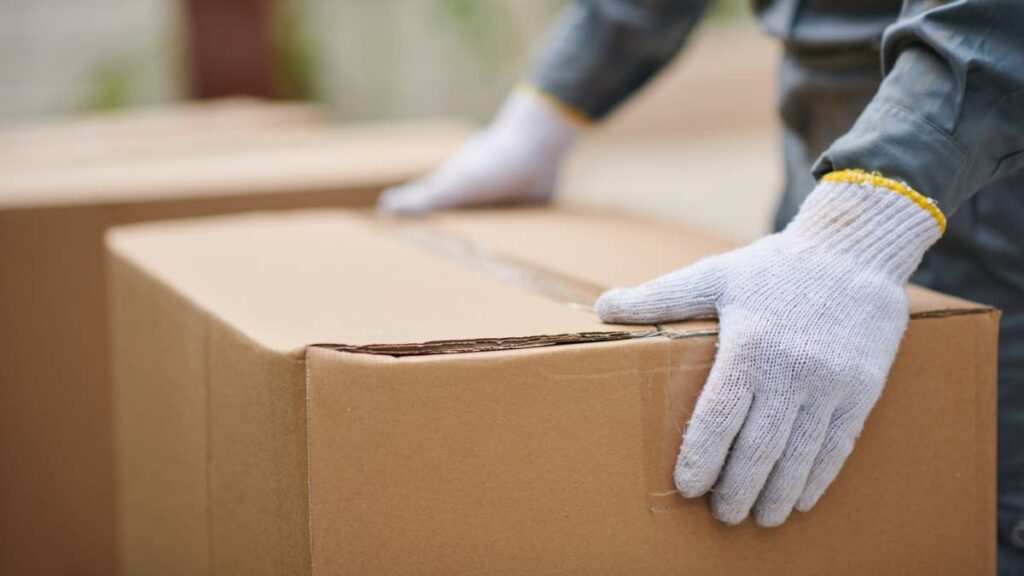
Close-up of a person wearing gloves and carrying a cardboard moving box. - where to get moving boxes
Tranporting moving boxes. | Source: iStock

Before you start collecting boxes, it helps to know what makes one reliable. A free box that collapses under weight is no bargain at all. Here are the four key considerations for choosing reliable moving boxes:

Durability and strength

  • Double-walled vs. Single-walled: Choose double-walled cartons for heavy items like books and tools. Reserve single-wall options for lighter belongings.
  • The feel test: A sturdy box should feel rigid when you run your hand along the sides. Avoid those that bend or crumple under light pressure.

Size and weight distribution

  • Small boxes: Best for dense, heavy items like books, tinned goods, or tools. This prevents the box from being overloaded.
  • Medium boxes: Ideal for everyday household goods, kitchenware, pantry supplies, or shoes.
  • Large boxes: Reserve these only for lightweight, bulky items such as bedding, cushions, or lampshades. Never fill large boxes with heavy goods, as this risks injury and breakage.

Condition

  • Damaged boxes: Don’t use any boxes that are water-stained, torn, or have sagging seams.
  • Odour: Avoid boxes that smell musty, as moisture weakens the cardboard structure, making them unreliable when stacked.
  • Specialty boxes: Look for specialty cartons for fragile items, like flat boxes, which are designed for moving large, flat items like televisions, mirrors, or artwork.

In cities like Sydney, Melbourne, or Adelaide, retailers often stock commercial-grade cartons; asking about moving boxes from Adelaide suppliers can lead you to higher-quality options than generic alternatives.

Types of free moving boxes to look out for

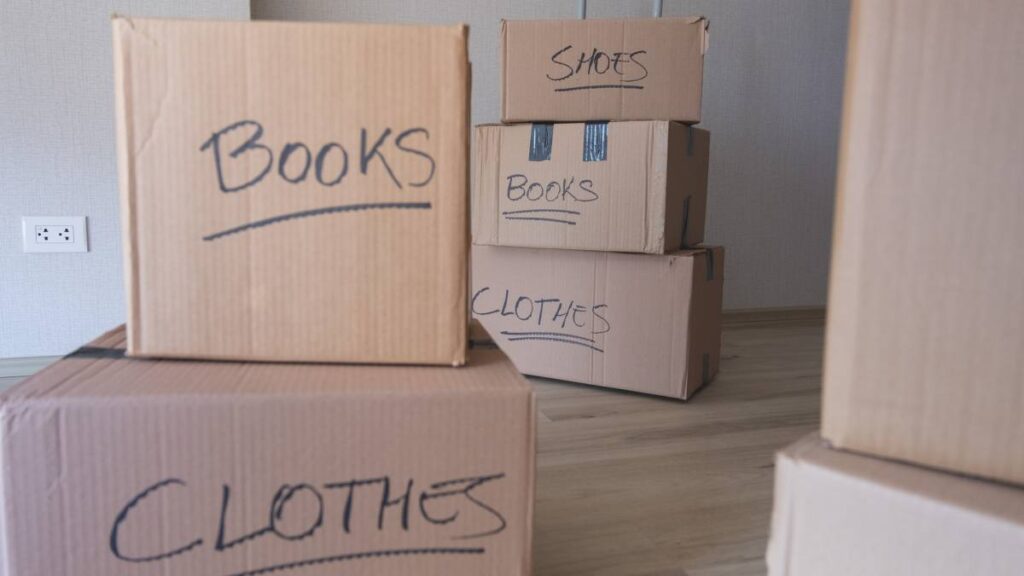
Cardboard moving boxes labeled 'Books,' 'Clothes,' and 'Shoes.' - where to get moving boxes
A stack of labeled boxes. | Source: iStock

Not all cartons are made equal! When you’re wondering where to find boxes for moving for free, remember that some are designed for fragile items, others for bulky loads, and some for heavy everyday goods.

These are the most common types and how to use them effectively:

  • Television box – Made to fit flat-screen TVs securely, usually with foam inserts or rigid side panels. Choose a box close to your TV’s screen size to stop movement inside. Always use corner protectors and keep the original packaging if possible. Many retailers or appliance stores will give away spare TV cartons if you ask soon after deliveries.
  • Glassware box – Designed with cardboard dividers or cells that separate each glass. They’re excellent for wine glasses, beer steins, or fragile mugs. Use tissue or butchers’ paper to wrap stems before placing them in the cells for extra padding. Liquor stores often discard sturdy cartons with dividers, which can substitute for glassware boxes if you reinforce them with tape.
  • Dishware box – Strong cartons with sections that hold plates vertically rather than stacked flat. This positioning reduces pressure and makes chipping less likely.
  • Box for pictures and mirrors – Flat, elongated boxes that keep frames, mirrors, and canvases upright. Choose a box slightly larger than the item so you can pad the sides with bubble wrap or foam. Never place multiple frames in one box unless separated with firm padding. Many framing shops will supply flat boxes or cardboard sheets if you ask.
  • Large boxes (45 x 45 x 60 cm) – Ideal for lightweight, bulky goods like bedding, doonas, pillows, lamps, or kitchen appliances. Avoid overfilling with heavy items, as these cartons can split or be unsafe to lift. Storage suppliers sell these in multi-packs, but some furniture or bedding stores may give them away after stock deliveries.
  • Medium-sized boxes (45 x 45 x 40 cm) – Often called the “workhorse” of moving boxes, medium cartons are sturdy and versatile. They work well for books, pantry items, clothing, or shoes. These are the most common size you can get in bundles.
  • Small boxes – Compact cartons that stay strong even when filled with dense goods. Use them for cutlery, utensils, chargers, cables, small appliances, or decorative ornaments. They’re also useful for toiletries or cleaning products, as leaks are contained. Liquor cartons, shoe boxes, and fruit boxes from supermarkets are excellent free substitutes.

Where to get free moving boxes in Australia

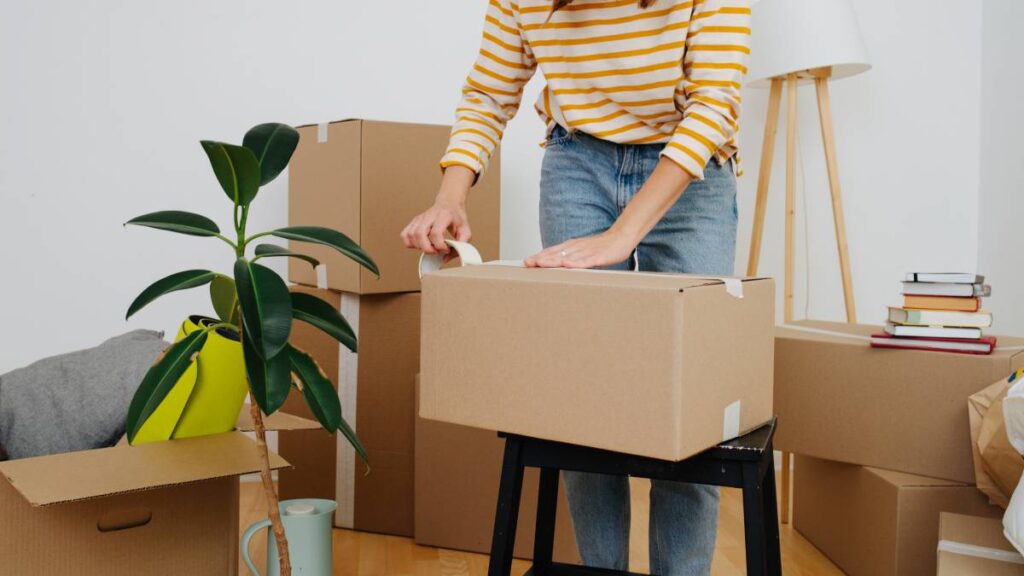
A woman carefully seals a large moving box with packing tape in preparation for a house move. - where to get free moving boxes
Packing for relocation. | Source: iStock

Finding cartons at no cost can save you hundreds of dollars. The key is knowing where to find cardboard boxes for free and how to ask. Here are the most reliable places to start:

Friends, family, neighbourhood

One of the easiest ways to collect moving boxes for cheap is by asking people you already know. Friends or neighbours may have leftover boxes from online deliveries or past moves. A quick message in a group chat or local noticeboard often produces results, especially if you make it easy by offering to pick them up at a convenient time.

Online marketplaces

Social platforms are full of people giving away moving boxes. Facebook Marketplace, Buy Nothing groups, Freecycle, and Gumtree’s free listings often feature cartons in cheap boxes for moving in excellent condition.

Set up alerts for your suburb so you can respond quickly; these posts are often claimed within hours. Metropolitan areas see particularly high turnover on these platforms, so searching for cheap moving boxes in Melbourne groups can yield results within the same day. And when asking, keep your request short and specific, such as “Looking for 10–15 medium moving boxes; can collect after 6 pm.”

Local retailers and supermarkets

Shops receive large quantities of stock daily and often discard strong cartons. A supermarket is usually the best place to get moving boxes for free; they typically have banana boxes, which are sturdy and easy to stack, while liquor stores regularly recycle wine cartons with built-in dividers that are perfect for glasses. 

The best time to ask is just after deliveries, either early morning or late evening. Speak to the staff politely and see if they can set some aside for you.

Garage sales and community markets

Here’s where to get free packing boxes: markets and garage sales often leave sellers with piles of empty boxes once the day ends. Arriving near closing time and offering to take cartons off their hands is an easy way to collect a variety of sizes. 

Many stallholders would be willing to give them away, saving them the effort of disposal. Make sure to bring tape and a trolley to reinforce and transport them on the spot.

Recycling centres

Wondering how to get moving boxes for cheap? Some recycling centres allow residents to collect intact cartons before they’re compacted. Always call ahead to check local policies, as rules vary between councils. Be selective; only take boxes that are dry, firm, and free from stains. It’s also wise to reinforce these with tape before using them for fragile items.

Local removalist service providers

Removalist companies often have leftover boxes from previous jobs. Many will sell them at a discount or even give them away if they’re still in good condition. Calling around to local companies can save money while also letting you compare removalist costs if you’re planning to book help.

Schools, libraries, offices

Institutions like schools and libraries discard cartons during term breaks or when new stock arrives. Offices also throw out large quantities during cleanouts. Contacting admin staff ahead of these times can secure strong, uniform cartons. Some facilities may even let you use loading docks to make collection easier.

Where to get cheap moving boxes

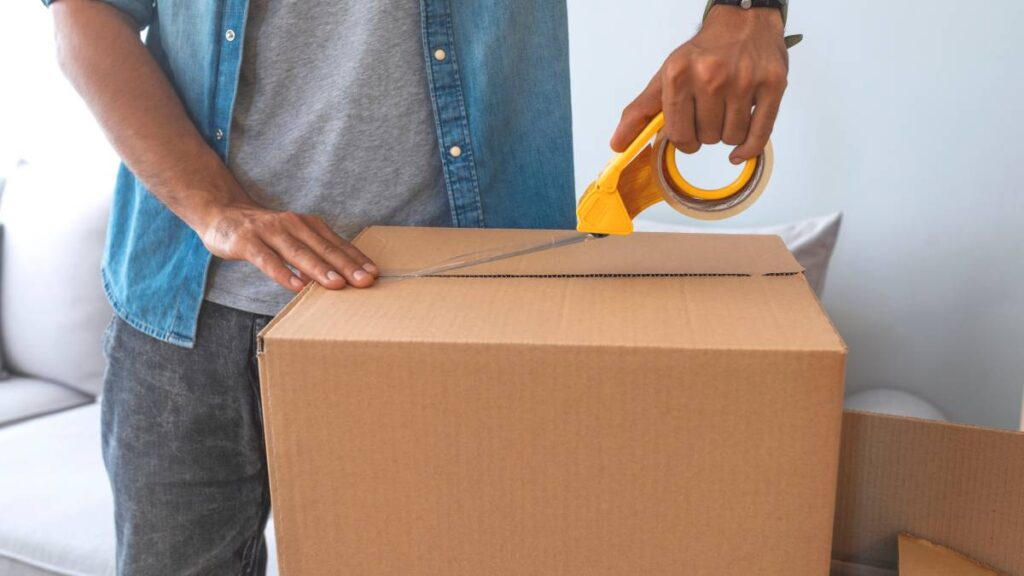
Close-up of a person sealing a brown cardboard box with packing tape. - where to get inexpensive moving boxes
Sealing the moving box securely. | Source: iStock

If free boxes don’t cover all your needs, there are plenty of inexpensive moving boxes you could look into. 

Renting

Renting plastic crates is increasingly popular, with many companies providing sturdy, reusable crates delivered to your door. Some companies charge by individual crate per week—delivery and pickup included—but many bundle their packages based on how big the move is.

Bulk suppliers and wholesalers

For those wondering where they can buy cheap moving boxes, bulk suppliers are a cost-effective choice. Carton suppliers sell various sizes of cartons in packs and might even buy them back if returned in good condition. These wholesalers often provide discounted bundles or moving packs, which can bring down the average cost per box.

Retail stores and storage centres

Even storage centres and hardware chains stock moving cartons. Some charge delivery fees for online orders, so compare costs with local pickup. When buying in bulk, the difference of a few cents per box can add up quickly. Major suppliers of moving boxes in Sydney typically maintain larger inventories, making it easier to find bulk deals.

Checking and preparing your boxes for moving

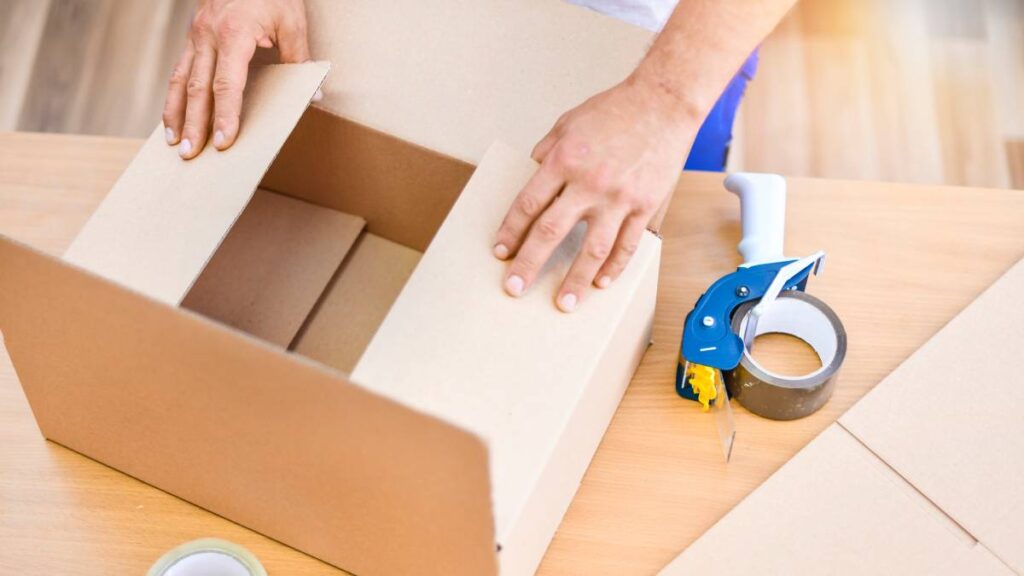
A person prepares a cardboard box for packing, showing the folding of the top flaps before sealing. - where to find free and cheap moving boxes
Folding a large cardboard moving box. | Source: iStock

Even sturdy cartons need a quick check before you fill them. Taking a few minutes to prepare boxes properly reduces the chance of collapse and keeps your belongings secure during transit. A well-prepared box also makes moving easier for you and your removalists, especially if you’re moving interstate.

  • Inspect for strength – Look for water stains, soft spots, or sagging walls. A musty smell often signals damp damage. Reject boxes with mould, pests, or crushed corners.
  • Reinforce weak boxes – Use strong packing tape to secure seams, especially along the base. Replace bottom flaps if they don’t close tightly, or overlap them for extra support.
  • Test weight limits – Keep small cartons under 12 kg, medium cartons under 20 kg, and use large boxes only for light goods like linen or cushions. Overloaded boxes are difficult to carry and may split in transit.
  • Stack-test before moving – Load a box with a few items, place another on top for 30 seconds, and check for bowing. If the base gives way, use that box only for light items.
  • Line fragile cartons – Add a layer of butchers’ paper, bubble wrap, or foam along the sides and bottom before packing crockery, glassware, or electronics. This protects against shocks during loading.
  • Seal properly – Use the “H” method. Place two strips of tape along the seam and one across the flaps. For heavy cartons, add a third strip for extra strength.
  • Label clearly – Mark cartons with the destination room and handling notes like “Fragile” or “This Side Up” on at least two sides. It helps removalists stack correctly and speeds up unpacking.
  • Do a mid-pack safety check – Once you’ve filled and sealed a box, gently press or nudge it while stacked. If there’s give, redistribute the weight or add reinforcement before moving day.

Get ready to pack

You don’t need to overspend on packing supplies. By simply asking here and there, you can collect sturdy free cartons from community groups, retailers, and neighbours, or choose cheap options from bulk suppliers and crate hire services. By preparing and reinforcing boxes properly, you’ll keep your belongings safe and avoid stress on moving day.

When you’re ready to take the next step, compare quotes from trusted professionals. You can find qualified and expert removalists on Oneflare who can handle the packing and transport for you, allowing you to focus on other important moving tasks.


FAQs on moving boxes

Can I reuse cardboard boxes safely when moving house?

Yes, provided they are dry, structurally sound, and free of pests. Avoid reusing food cartons for fragile items unless reinforced. Always check for water damage, soft seams, or signs of wear before trusting them with valuable belongings.

What’s cheaper: buying cardboard boxes or hiring reusable crates?

For short moves, crate hire is usually more economical. For example, crate rental companies charge roughly $130+ for twenty-five crates for one week, while buying the same number of new cartons at, say, $3.50 each would cost about $88. 

Add in the time and cost of disposing of cardboard afterwards, and crates often come out ahead for short timelines. If you need boxes for longer than three months, buying is generally cheaper.

How many moving boxes do I need for a 2-bedroom house in Australia?

On average, about thirty-five cartons are enough: twenty medium, ten small, and five large. Add specialty cartons as needed for wardrobes and electronics.

When is the best time to ask shops for free cardboard boxes?

Early morning and late evening, right after stock deliveries, are the most reliable times. Staff often have surplus cartons they’re happy to set aside if you ask politely.

What should I check before reusing old moving boxes?

Make sure they are dry, free of mould, and smell neutral. Check seams and corners for strength. Avoid anything with water stains, rodent damage, or sagging panels.